

Planting a Native Hedge for Privacy
Why a native hedge beats a fence
A fence goes up in an afternoon and stops doing much beyond blocking the view. A native hedge takes longer, but it earns its keep every day of the year. It gives you privacy, of course, but it also breaks the wind, drains the worst of the winter wet, shelters stock, holds soil on a slope and provides cover and food for birds, bats and insects that a panel fence never will.
On a smallholding, a mixed native hedge is also the cheapest boundary you can plant. Bare-root whips cost a fraction of fencing materials, and a well-managed hedge will still be standing in a hundred years, throwing out new growth every spring. Plant it once, look after it for three or four seasons, and it looks after itself.
Choosing the right mix of species
A single-species hedge is a monoculture, and it shows: one pest or one bad year and you have an ugly gap. Mix at least three or four natives so the hedge has depth, varied flowering times and food right through the autumn.
- Hawthorn — the backbone of almost every traditional British hedge. Fast, thorny, tolerant of clay, and smothered in May blossom followed by haws the birds strip by Christmas. Roughly half your plants.
- Blackthorn — the densest, most impenetrable species you can plant. Brilliant for privacy and nesting cover, and the sloes make gin worth the wait. Because it suckers, keep it away from the vegetable beds unless you enjoy a fight.
- Hazel — upright and handsome, with catkins in February and nuts in September. It responds superbly to coppicing and gives the hedge a taller, softer structure among all those thorns.
- Good companions — field maple, guelder rose, dog rose, spindle and crab apple. A handful of these every few metres adds colour and insect value without weakening the barrier.
Aim for something like 50 per cent hawthorn, 25 per cent blackthorn, 15 per cent hazel and 10 per cent companions. That mix gives you density low down, height in the middle and berries at eye level.
Ground preparation and planting
Order bare-root whips for delivery between November and March, and get them in the ground the same week. If you cannot, heel them into a spare patch of soil or a bucket of damp compost rather than leaving the roots drying in the shed.
Clear a strip at least a metre wide of grass and weeds — this is the single biggest factor in whether your hedge thrives, because young whips cannot compete with established couch or nettles. Fork over the strip to a spade's depth and add a little well-rotted manure if the soil is poor.
Plant in a double staggered row: rows about 40 centimetres apart, plants 40 to 45 centimetres apart within each row, with the second row offset. That gives you roughly five plants per metre of hedge, which is dense enough to knit together within three or four years. Dig a notch with a spade, slip the roots in, firm with your heel so the soil is tight around them, and check that the old soil mark on the stem sits at ground level.
Mulch the whole strip with 5 to 7 centimetres of bark or well-rotted manure, keeping it clear of the stems. Fit spiral guards against rabbits and voles, and taller guards if deer visit.
The first three seasons
Keep the strip weeded. That is the whole job, really. In a dry spell through the first two summers, give each plant 10 to 20 litres of water a week — a slow soak is far better than a daily sprinkle. Do not trim the hedge in its first two years; you want top growth building roots, not a tidy line.
If a plant dies, replace it the following winter. Gaps left for years never fill in properly, and a gap is exactly where the wind and the eye both get through.
When to cut — and when not to
Cut hedges in late winter, ideally January or early February while the plants are still dormant. The nesting season runs roughly from March to August, and hacking a hedge in May or June will destroy nests and leave you on the wrong side of the law on agricultural land, where cutting is generally prohibited between 1 March and 31 August.
Cut the sides on a slight batter, wider at the base than the top, so light reaches the bottom and the hedge stays thick to ground level instead of going bald and leggy. Take the top back a little each year for the first few years, then let it gain height slowly. Hazel will not shoot well from old, thick wood, so cut it back to a young side shoot rather than leaving a stub.
Every ten to fifteen years, consider laying a section instead of trimming it. Laying thickens the base, closes gaps and gives you a genuinely stock-proof barrier. It is slow, satisfying winter work and the sparrows will thank you for it.
What you end up with
A native hedge takes about five years to become a proper screen and the best part of a decade to reach its full, dense, thrumming glory. In return you get a boundary that needs perhaps one day of your attention a year, that shelters your plot, feeds your birds, gives you sloes and hazelnuts, and quietly outperforms any fence you could have bought for the same money.
tag: Smallholding

Eleanor Hartley Author
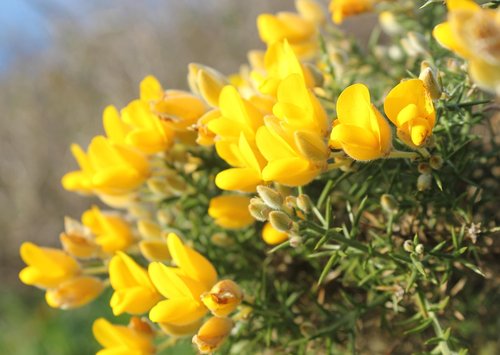
Gorse flowers were once infused for tonics, while ashes served as soap. Learn historical uses without harming this valuable native shrub.
YOU MAY ALSO LIKE
Using Gorse in Traditional Country Remedies
Jun 29
10Prick frozen sloes and cover with gin and sugar in a sterilised jar. Shake weekly and wait at least three months for a smooth liqueur.
read more
Making Sloe Gin for Cold Evenings
Jun 27
10Heathland offers bilberries, mushrooms and pine needles across the seasons. Always follow local byelaws and take only what you can use.
read moreSmallholding
-

ERRIC CATONA
Plan your land, budget and daily routine before buying livestock or seeds. Careful preparation makes the transition to rural life far smoother.
May 19, 2016 at 5.12 pm
Reply
ERRIC CATONA
Consider acreage, shelter and daily time commitments before adding animals. Hens, sheep or goats each bring different rewards and challenges to a holding.
May 19, 2016 at 5.12 pm
Reply -
ERRIC CATONA
Create a sturdy home for your flock using pallets and reclaimed timber. Good ventilation and secure latches keep birds safe from foxes and bad weather.
May 19, 2016 at 5.12 pm
Reply
Foraging
Your email address will not be published.