
Cultivating Gorse for Wildlife and Boundaries
Why Gorse Belongs on a British Smallholding
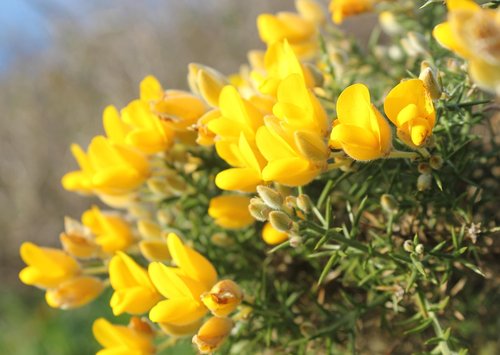
Gorse — also known as furze or whin — is one of those plants that divides opinion. To some, it is a prickly nuisance that invades pasture and scratches arms. To the informed smallholder, however, it is a valuable asset. This native evergreen shrub, with its coconut-scented yellow flowers and dense, thorny structure, offers a boundary that is both stock-proof and wildlife-friendly. It thrives on poor, acidic soils where little else will grow, fixes nitrogen, and provides year-round shelter for small birds. If you have a windswept corner, a tired fence line, or a patch of rough ground, gorse could be your answer.
Choosing the Right Site and Soil
Gorse is not fussy about soil fertility, but it does demand full sun and free drainage. It will sulk and die in waterlogged or heavy clay ground, and it dislikes chalky soils. On a smallholding, the ideal spot is an exposed boundary where you want a windbreak, or a south-facing slope with thin, sandy or stony soil. Gorse grows to between 2 and 3 metres, so it suits a tall hedge or a shelterbelt rather than a low garden border. Because it is a pioneer species, it will happily colonise rough ground, but it can also spread by seed if left unchecked. Plan where you want it to stay, and keep it away from areas you cultivate regularly.
Before planting, clear the ground of competing weeds, especially bracken or brambles. A strimmer or brushcutter will make short work of the initial clearance. If your soil is very acidic (pH below 5.5), gorse will feel at home. If it is neutral or slightly alkaline, growth will be slower, and you may need to add bulky organic matter to improve conditions.
Planting and Establishing Your Gorse Boundary
Bare-root gorse whips are best planted between November and early March, whilst the plants are dormant. For a dense boundary, plant in a double staggered row, spacing the whips about 45 centimetres apart. This gives each plant room to spread whilst still knitting together into an impenetrable barrier. Dig a hole wide enough to take the roots without cramping them, and set the plant at the same depth it was growing in the nursery. Firm the soil gently and water well.
Mulch around the base with well-rotted bark or straw, but keep the mulch clear of the stems to avoid rotting. Rabbits and deer find young gorse tempting, so protect each whip with a spiral guard or a small cage of wire netting. Keep the area weed-free for the first two growing seasons. Gorse is slow to establish, but once its roots are down, it will romp away. You can expect the first flowers in two to three years. Do not feed it — gorse fixes its own nitrogen and too much richness will encourage soft, floppy growth.
Managing Gorse for Wildlife and a Tidy Boundary
The key to successful gorse management is rotational cutting. If you cut the whole hedge every year, you will lose the dense inner structure that birds need, and you will reduce flowering. Instead, divide your gorse boundary into three or four sections. Cut one section each year, or every second year, leaving the rest untouched. This creates a mosaic of ages, from low regrowth to tall, leggy thickets.
Timing is critical. Small birds nest between March and August, so avoid cutting during that period. The best window is late August to early October, after the nesting season but before the worst winter weather. Alternatively, cut in February, just before the main nesting push. Use a brushcutter with a clearing blade or a chainsaw — hand shears are only practical for very small patches. Cut the stems low, within 10 to 15 centimetres of the ground, to encourage dense, bushy regrowth.
Burning is a traditional method, but it is risky, especially in dry weather. If you do burn, do so only in small, controlled patches, with a water supply to hand and never in a drought. Cutting is safer and more predictable. Remember that gorse flowers on previous year's growth, so a hard cut will delay flowering for a season. That is why rotational cutting works so well.
Wildlife Benefits and Practical Uses
A well-managed gorse boundary is a wildlife magnet. Its dense, thorny interior provides nesting sites for wrens, dunnocks, robins, whitethroats, linnets and yellowhammers. The thorns keep predators at bay, whilst the evergreen foliage offers roosting cover on cold winter nights. The bright yellow flowers, which appear as early as January in mild years, are a vital source of nectar and pollen for bees and butterflies, including the green hairstreak. Later, the seeds are eaten by finches and other small birds.
- Wrens and dunnocks nest deep inside the thorns, safe from cats and magpies.
- Linnets and yellowhammers feed on the ripe seeds in late summer.
- Early flowers provide a lifeline for bees emerging on warm winter days.
Gorse also has practical uses on the smallholding. Its dense growth makes an excellent windbreak for livestock, and it can be grown as a living fence that is more durable than timber. Dead gorse branches are superb kindling — they burn hot and fast, even when green. The flowers can be infused to make a traditional gorse wine or a delicate tea. And because gorse is a legume, it fixes nitrogen in the soil, gradually improving the ground beneath it for future planting.
Pitfalls and Precautions
Gorse is not without its challenges. It is highly flammable, so never allow it to grow close to buildings, and keep a firebreak if you live in a high-risk area. It can also become invasive if you let it set seed. Each plant produces thousands of seeds that can remain viable in the soil for decades. If you want to keep it in check, cut before the seed pods turn brown and split. Wear thick leather gloves, long sleeves and eye protection when working with it — the thorns are unforgiving.
If you have grazing livestock, be aware that gorse is not a favourite forage, though it can provide shelter. It can spread into pasture if not managed, so keep your boundary cut back on the field side. Finally, check local regulations before burning, and always have a plan for controlling a runaway fire. With careful management, however, gorse will reward you with a boundary that is beautiful, useful and alive with birdsong.
tag: Wildlife

Eleanor Hartley Author
Plant native wildflowers, leave a patch of nettles and provide shallow water. These simple steps support pollinators throughout the growing season.
YOU MAY ALSO LIKE
Attracting Bees and Butterflies to a Country Garden
Aug 16
10Listen for tawny, barn and little owl calls after dusk. Distinctive hoots and screeches help identify which birds share your local countryside.
read more
Recognising Common British Owl Species at Night
Aug 13
10Harvest flexible willow rods in winter and soak them before weaving. Simple obelisks and hoops add rustic charm while supporting climbing plants.
read moreSmallholding
-

ERRIC CATONA
Collect birch twigs and bind them tightly onto a hazel handle. A handmade besom is ideal for sweeping paths, hearths and workshop floors.
May 19, 2016 at 5.12 pm
Reply
ERRIC CATONA
Work with freshly felled timber using hand tools like axes and drawknives. Learn to shape spoons, stools and pegs without relying on power machinery.
May 19, 2016 at 5.12 pm
Reply -
ERRIC CATONA
Pair carrots with onions, and beans with sweetcorn to confuse pests and boost growth. Rotate these combinations each season for healthier soil.
May 19, 2016 at 5.12 pm
Reply
Foraging
Your email address will not be published.